A production line doesn’t fail all at once. More often, performance erodes quietly — through minor misalignment, gradual wear, and small mechanical inefficiencies that compound over time. Even lines that were installed correctly and commissioned on schedule can lose throughput, experience unplanned downtime, or require excessive maintenance if optimization is overlooked.
Installation is the foundation, but long-term performance is determined by what happens next.
In food, beverage, and chemical processing environments — where uptime, sanitation, and consistency are non-negotiable — disciplined mechanical optimization plays a critical role in protecting productivity and extending equipment life.
Installed Doesn’t Always Mean Optimized
A line can meet installation specifications and still underperform in daily operation. Once production begins, real-world conditions introduce variables that static installation cannot fully predict: load changes, product variation, temperature shifts, washdown exposure, and operator adjustments.
Over time, these factors can affect:
- Conveyor tracking and belt tension
- Transfer point alignment
- Drive component wear
- Vibration levels and resonance
- Product flow consistency
Left unaddressed, small deviations become chronic issues — increasing maintenance demands and reducing throughput.
The Hidden Cost of Mechanical Drift
Mechanical systems naturally drift as they settle into operation. Bearings wear, chains stretch, belts relax, and fasteners loosen under vibration. These changes rarely trigger immediate failures, but they gradually create inefficiencies that operators and maintenance teams are forced to manage reactively.
Common symptoms include:
- Minor product jams or spillage
- Inconsistent speeds between line sections
- Increased noise or vibration
- Accelerated component wear
- Frequent micro-stoppages
Each issue may seem manageable in isolation. Together, they reduce line reliability and shorten the useful life of equipment.
Why Small Adjustments Matter More Than Major Repairs
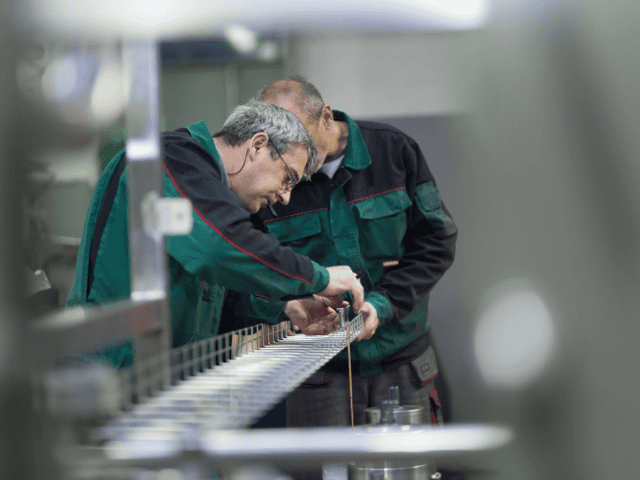
Optimization isn’t about overhauling systems — it’s about precise mechanical refinement. Skilled millwrights can often restore performance through targeted adjustments that address root causes rather than symptoms.
This includes:
- Fine-tuning conveyor alignment and tracking
- Correcting belt and chain tension
- Adjusting transfer elevations and angles
- Realigning drive components to reduce vibration
- Verifying anchoring and base stability under load
These corrections improve product flow, reduce stress on components, and stabilize the system before wear escalates into failure.
Commissioning Is Only the Beginning
Commissioning ensures a line can run. Optimization ensures it runs well — consistently and reliably.
During early production, mechanical behavior changes as systems operate under full load. This is the ideal window to identify inefficiencies and make refinements that will pay dividends throughout the life of the line. Addressing performance issues early reduces unplanned downtime and minimizes long-term maintenance costs.
Facilities that treat commissioning as a finish line often miss this opportunity. Those that view it as a transition into optimization build stronger, more resilient operations.
Performance Over the Life of the Line
Long-term performance depends on proactive mechanical support, not reactive fixes. Regular evaluation and optimization help facilities:
- Maintain consistent throughput
- Reduce unplanned downtime
- Extend component life
- Improve sanitation and cleanability
- Protect safety and compliance
In high-demand processing environments, these gains translate directly into operational stability and cost control.
A Partner Beyond Installation
True line performance requires more than installation expertise. It requires an understanding of how systems behave over time — and the experience to adjust them precisely as conditions evolve.
By supporting optimization during commissioning and beyond, Incline helps processors protect their investment and keep production running as intended. Small mechanical adjustments, applied at the right time, deliver outsized returns in reliability, efficiency, and uptime.