Whether expanding a production line, replacing aging equipment, or relocating machinery within a facility, the move itself can determine whether a project stays on schedule—or becomes an expensive source of downtime.
While cranes, forklifts, and rigging equipment often receive the most attention, they represent only one part of a successful machinery move. The real work begins long before equipment leaves the floor. Every move requires careful planning, engineering, coordination, and precise execution to protect both the equipment and the production environment.
For manufacturers, the goal isn’t simply moving a machine. It’s returning that machine to production safely, accurately, and with minimal disruption.
Successful Moves Begin Long Before the Lift
One of the biggest misconceptions about machinery moving is that the lift itself is the most difficult part of the project. In reality, the planning phase often determines the outcome.
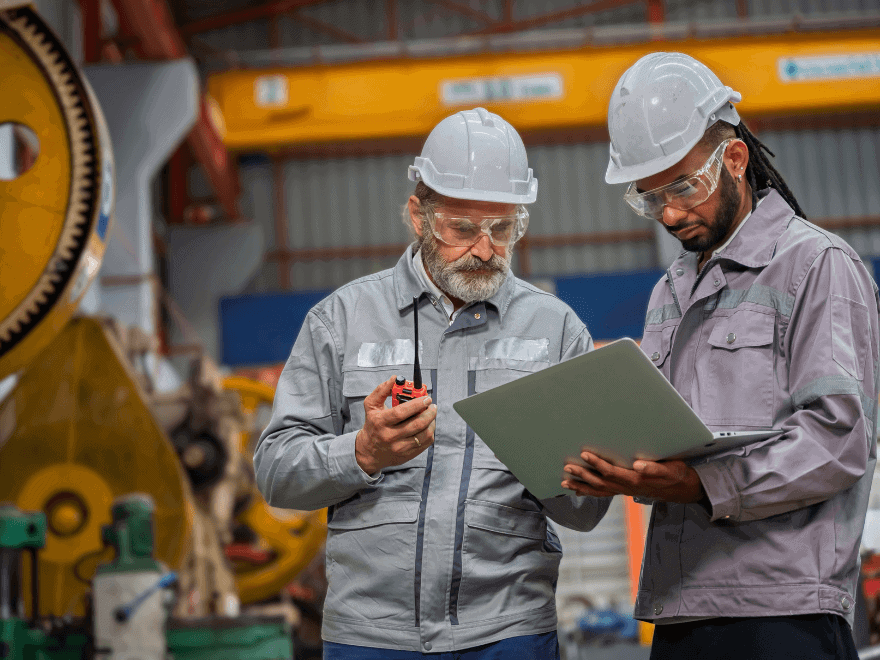
Before equipment is ever disconnected, experienced rigging teams evaluate the machine itself, how it will be handled, where it needs to travel, and how it will ultimately be positioned. Weight distribution, lifting points, floor loading, available clearances, equipment dimensions, and surrounding operations all influence the approach.
Just as importantly, every move must account for the operating environment. An active food processing facility presents different challenges than a chemical plant or plastics manufacturer. Production schedules, sanitation requirements, employee traffic, and restricted work areas all become part of the planning process.
The more questions answered before the move begins, the fewer surprises occur once equipment is in motion.
The Route Can Be More Challenging Than the Move
Moving a machine twenty feet across a production floor can sometimes be more complicated than transporting it across the country.
Door openings, overhead piping, structural columns, floor conditions, utility connections, confined spaces, and existing production equipment can all influence how machinery is safely relocated. In many facilities, maintaining production while equipment is being moved adds another layer of complexity.
Experienced machinery movers don’t simply identify the shortest route—they identify the safest and most efficient one.
Evaluating travel paths, staging areas, floor protection, equipment clearances, and access requirements before work begins helps reduce delays while protecting both the facility and the equipment throughout the move.
Every Move Requires the Right Rigging Strategy
No two machinery moves are exactly alike. The size, weight, configuration, and final destination of the equipment determine the rigging approach. Ceiling height, available floor space, lifting access, structural limitations, and positioning accuracy all influence whether cranes, forklifts, hydraulic gantries, skates, hoists, or other specialized equipment provide the safest solution.
Just as important is understanding how those tools work together. Proper rigging isn’t simply about lifting capacity, it’s about maintaining complete control of the load throughout every stage of the move.
Because every lift introduces changing forces and changing conditions, planning the rigging strategy in advance helps reduce risk while improving efficiency once work begins.
Protecting the Equipment Is Just as Important as Moving It
Industrial machinery represents a significant capital investment, and many production systems contain sensitive mechanical and electrical components that require protection during relocation.
Disconnecting utilities, securing moving assemblies, protecting instrumentation, documenting equipment condition, and preparing machinery for recommissioning are all critical steps in a successful move.
These details may not be visible once production resumes, but they often determine how quickly equipment can be returned to service—and how reliably it performs afterward.
For plant-to-plant relocations, protecting machinery during transportation becomes equally important. Proper preparation helps preserve alignment, reduce the potential for damage, and simplify reinstallation at the destination facility.
Precision Placement Supports Long-Term Performance
A machinery move isn’t complete when equipment reaches its destination. Machines must be accurately positioned, leveled, aligned, and integrated with surrounding production systems. Even minor placement errors can affect conveyors, piping, utilities, material flow, maintenance access, or downstream equipment.
This is where industrial rigging and millwright expertise work together.
Once machinery is positioned, precision alignment and integration help ensure the equipment performs as intended while supporting efficient startup and long-term reliability.
Experience Makes the Difference
Every industrial facility presents unique challenges. Unexpected field conditions, limited access, production constraints, or changes in project scope require experienced teams capable of adapting without compromising safety or project schedules.
That’s why manufacturers increasingly look for partners who can manage machinery moving, rigging, millwright services, fabrication, and equipment integration as one coordinated effort. Eliminating handoffs between multiple contractors improves communication, reduces delays, and helps keep projects moving efficiently from planning through startup.
At Incline Industrial Services, machinery moving is more than transporting heavy equipment. It’s a carefully planned process that combines heavy equipment rigging, precision millwright services, and integrated project execution to help manufacturers relocate, position, and commission complex production systems safely and efficiently.
Whether moving a single machine across the production floor or relocating an entire processing line, successful projects begin with careful planning, and end with equipment that’s ready to perform.
Planning an equipment relocation or production line move? Incline Industrial Services provides heavy equipment rigging, machinery moving, millwright services, fabrication, and production line integration for food, beverage, chemical, plastics, personal care, adhesives, OEM, and general manufacturing facilities.