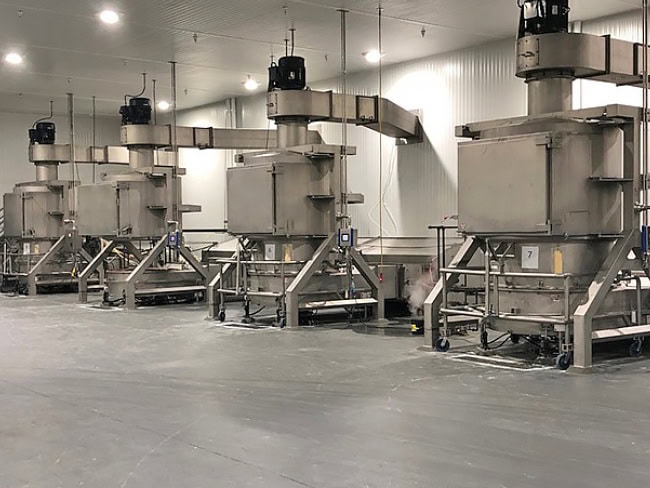
A production line is only as strong as its installation. When alignment, anchoring, or mechanical integration is off—even slightly—issues will surface immediately: vibration, tracking problems, premature wear, inconsistent product flow, and ongoing downtime. Equipment quality matters, but the installation process determines how that equipment actually performs once it enters production.
This overview breaks down the core technical phases behind a proper line installation and why engineering discipline is essential long before the first startup.
Planning: Establishing Technical Feasibility Before Equipment Arrives
Installation starts with engineering review—not equipment movement. Layouts are studied for tolerances, product-flow direction, structural loading, service access, and utility positioning. Engineers identify whether the proposed installation path is even physically possible. Floor conditions, overhead clearances, drains, sanitary zones, and crossover points dictate how equipment must enter and move through the facility.
At the same time, rigging teams prepare calibrated equipment, laser alignment tools, torque systems, certified rigging gear, so every movement and setup step can be executed with precision. Without a controlled plan, installation quickly becomes reactive and costly.
Rigging and Movement: Controlled Handling Through Constrained Spaces
Getting equipment from the truck into its final location often requires a level of precision that many outside the industry don’t see. Machines must be moved through narrow aisles, under piping networks, around mezzanines, and across floors that vary in slope and load rating.
This is where engineered rigging plans matter. Load distribution must be calculated. Overhead lifts must avoid torsion or drift. Sensitive components often require OEM-specified handling methods. A mismanaged lift or uncontrolled movement can create system defects before the equipment is ever powered on.
Rigging is an engineering-driven discipline, not a brute-force task.
Base Setting: Anchoring and Leveling That Dictates Performance
Once in place, equipment is anchored and leveled to tolerances defined by both engineering layout and OEM specifications. This stage directly affects longevity and performance. Floors are rarely perfectly flat, so shimming and precision leveling correct for slope or irregularities. Anchors must be installed to the required depth, spacing, and torque.
For food plants, base installation also supports sanitation: sealed anchors, cleanable surfaces, and hardware configurations that eliminate debris traps. A machine set out of level or anchored incorrectly will introduce long-term issues that no amount of operational adjustment can compensate for.
Mechanical Integration: Turning Individual Machines Into a Single System
A production line only works when the mechanical interfaces between machines function as one. Integration includes aligning transfer points, setting conveyor elevations, establishing correct centerlines, and ensuring mechanical drive components, gearboxes, chains, belts, couplings, operate within defined tolerances.
This is also where platforms, guards, sanitary covers, and operator access points are installed. Every adjustment here affects product flow, maintenance access, and safety compliance. Even slight misalignment in a transition zone can lead to constant micro-stoppages or jam points that accumulate into meaningful downtime.
Alignment and Calibration: Verifying the System Against Specifications
After the mechanical build, alignment is verified with precision tools. This phase confirms whether the installation meets OEM, layout, and performance requirements. Motors must align correctly with gearboxes. Conveyors must match designed flow paths. Couplings must meet concentricity and angular alignment tolerances.
Test runs identify vibration, resonance, or tracking issues that weren’t visible during static installation. This is where engineering assumptions meet real mechanical behavior, and where corrections can still be made efficiently.
Safety & Compliance: Installation That Meets Operating Requirements
Because Incline works across food, beverage, and chemical environments, compliance is integrated into the installation process itself. Proper guarding, sanitary design requirements, contamination-prevention steps, equipment verification logs, and pre-startup safety reviews all occur during installation, not afterward.
This ensures the system passes internal and regulatory requirements before commissioning begins.
Commissioning: Making Sure the Line Runs Under Real Conditions
Commissioning is where the system transitions from “installed” to “operational.” Incline supports dry runs, OEM calibration, and early production testing to identify torque, tracking, vibration, or alignment adjustments required under real load.
This stage stabilizes the line and significantly reduces the ramp-up period, allowing the operation to reach steady-state production faster and with fewer mechanical disruptions.
Why One Partner Strengthens Every Phase
Installation involves multiple engineering disciplines: rigging, millwrighting, fabrication, alignment, safety, and commissioning. When these are split between different contractors, tolerances drift, details are lost, and accountability becomes fragmented.
A single integrated partner maintains continuity across the mechanical lifecycle of the project, from layout interpretation through first product run, reducing risk and improving long-term reliability.
Conclusion
Production line performance is determined long before startup. When installation is engineered correctly, planned accurately, executed safely, aligned precisely, and validated under load, the line performs consistently and maintains efficiency over its full lifecycle.
Click here for a deeper breakdown of Incline’s full line installation process—including step-by-step responsibilities, engineering tolerances, and commissioning support.